Vincent Valentine stands as one of gaming’s most layered antiheroes. The gun-wielding former Turk hides behind a crimson cloak and dark sunglasses, concealing decades of guilt and monstrous transformation. In Final Fantasy VII, he’s optional, a party member you can miss entirely if you don’t explore the Nibelheim mansion, yet he’s become central to understanding the game’s lore and one of its most beloved characters. His role expanded dramatically across the extended FF7 universe, from Dirge of Cerberus to Crisis Core and the modern Remake continuity. Whether you’re revisiting the original PS1 classic or tackling the contemporary Remake, understanding Vincent’s story, abilities, and significance enriches the entire experience. This guide covers everything you need to know about Final Fantasy 7 Vincent Valentine: his background with the Turks, his transformation mechanics in combat, his arc across multiple games, and why fans remain obsessed with this morally complex character nearly three decades after his debut.
Table of Contents
ToggleKey Takeaways
- Vincent Valentine evolved from an optional hidden character in Final Fantasy VII to a morally complex antihero central to understanding the game’s lore and Sephiroth’s influence across the extended universe.
- Vincent’s transformation mechanic through Limit Breaks, particularly the Galian Beast and Death Penalty forms, makes him a versatile combatant capable of functioning as both a high-damage dealer and pseudo-tank depending on tactical needs.
- Vincent’s character arc focuses on accepting his past choices and humanity rather than achieving traditional redemption, a thematic complexity reinforced through Crisis Core, Dirge of Cerberus, and the modern Final Fantasy VII Remake.
- The Final Fantasy VII Remake significantly expands Vincent’s presence with extended character development scenes and dialogue that clarify his emotional state and metaphysical connection to other infected characters like Cloud and Aerith.
- Vincent’s iconic visual design—red cloak, black outfit, and gunslinger aesthetic—combined with his mysterious demeanor and subtext-driven characterization, established a timeless archetype that influenced how Final Fantasy approaches complex, flawed protagonists.
- Players can optimize Vincent’s build for endgame encounters by equipping Restore and Healing materia, prioritizing Support materia, and upgrading to weapon choices like Bullet or the final Death Penalty weapon for maximum damage output.
Who Is Vincent Valentine?
Vincent Valentine is a former member of the Turk Unit, the elite special operations division serving the Shinra Electric Power Company. He’s introduced as a sleeping gunman hidden in Nibelheim’s Shinra Mansion basement, comatose for roughly a decade following catastrophic events tied to Sephiroth and the Calamity. On the surface, Vincent appears as a stoic, mysterious fighter, all cool demeanor and guarded conversations. Beneath that exterior runs a character consumed by guilt, experimentation, and an internal struggle against an inhuman power attempting to overtake his body.
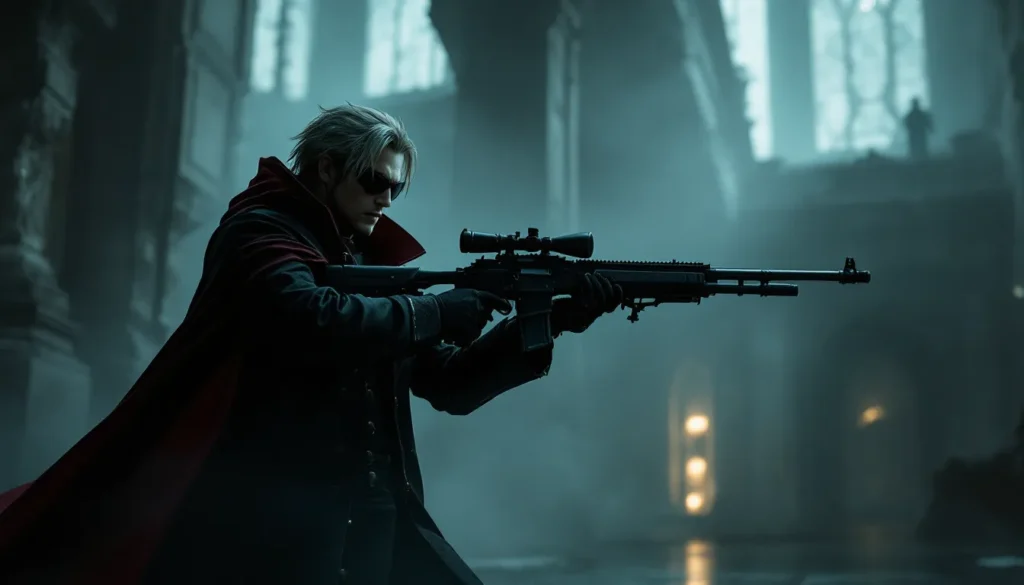
What makes Vincent unique among Final Fantasy VII’s ensemble is his duality. He’s simultaneously the suave gunslinger and the monster struggling for control. His design, black coat, red cloak, iconic rifle, became iconic across gaming culture. In Dissidia and Kingdom Hearts appearances, Vincent maintains that instantly recognizable silhouette. He speaks rarely, choosing action over words. When he does dialogue, it carries weight: Vincent’s character depth comes through subtext rather than exposition dumps.
Vincent’s Role In Final Fantasy VII
The Turks And Vincent’s Past
Vincent’s backstory ties directly to Shinra’s darkest secrets. As a Turk, he was a frontline soldier for corporate interests, enforcing the company’s will across the world. His descent into his current state stems from protecting Lucrecia Crescent, a scientist working on Project G, Shinra’s ambitious genetic experiment that involved Sephiroth himself. When confronted by Sephiroth over Lucrecia, Vincent chose to protect her rather than comply with his orders, leading to his defeat and poisoning.
Sephiroth infected Vincent with the Jenova cells being developed for Project G, leaving him with an unstable physiology. Rather than kill him, Sephiroth left Vincent to suffer the consequences, a fate he considers a slow death. Lucrecia, wracked with guilt and unable to accept what she’d become, eventually entombed herself in a coffin beneath the Midgar Crater, leaving Vincent with decades of unresolved trauma and unanswered questions.
This backstory grounds Vincent in moral complexity. He wasn’t a victim of circumstance: he made a choice that fractured his life. His guilt drives his current arc, he’s not seeking redemption to become a hero, but to atone for his failures. This separates him from characters like Cloud, whose trauma stems from identity confusion. Vincent knows exactly who he was and despises it.
A Hidden Party Member
Getting Vincent requires specific action. Players must discover the Basement Key in Nibelheim’s Shinra Mansion, navigate through the safe (which requires a combination players can find through optional exploration), and wake Vincent from his hibernation. This optional design is intentional, Vincent’s narrative doesn’t drive FF7’s main plot, but it deepens players’ understanding of Shinra’s reach and Sephiroth’s influence.
Once recruited, Vincent stands apart from your other party members. He doesn’t join the party for camaraderie or a shared mission. He awakens because Cloud and friends represent a chance to confront the sins of his past and potentially stop Sephiroth. His integration into the group feels reluctant, almost businesslike compared to characters like Barret or Yuffie. This coolness makes him narratively compelling, his eventual growth toward accepting the party’s friendship becomes meaningful precisely because connection doesn’t come naturally to him.
In the Final Fantasy VII Switch version and the Remake, Vincent’s status as a hidden recruit carries the same weight, though the Remake adds explicit story sequences clarifying his motivations and his connection to other characters.
Vincent’s Character Arc And Development
Overcoming Guilt And Redemption
Vincent’s arc isn’t about becoming a better person, it’s about accepting that he was human and fallible. Throughout FF7, he carries the weight of choices made decades earlier. His constant state of uncertainty mirrors the player’s own uncertainty about Sephiroth and Cloud’s reliability. As the narrative progresses and players encounter more about Vincent’s past, his guilt becomes palpable.
Crisis Core explores this further, showing Zack Fair and Genesis encountering Vincent during his Turk days and witnessing his moral struggles in real time. The extended universe, particularly Dirge of Cerberus, forces Vincent to confront the Chaos within him, the monstrous aspect born from Jenova cells, and genuinely fight for his humanity. By the game’s conclusion, Vincent doesn’t achieve perfect redemption. Instead, he accepts his past and chooses to move forward, which feels more authentic than traditional heroic arcs.
The original FF7 doesn’t dwell heavily on Vincent’s redemption explicitly, but the Final Fantasy 7 Remake deepens this thematically. When Vincent rejoins Cloud’s party in Nibelheim, his dialogue suggests ongoing internal conflict. He’s not suddenly healed: he’s taking the first step toward healing by engaging with the world rather than isolating himself.
Relationships With Other Characters
Vincent’s dynamics with other party members reveal character depth through contrast. With Cloud, there’s mutual understanding, both carry trauma and struggle with their identities. Vincent recognizes Cloud’s fractured state and relates to it, though his expression of this recognition remains subtle. His interactions with Barret involve respect but distance: Barret’s straightforward morality contrasts sharply with Vincent’s moral ambiguity.
The relationship with Lucrecia, though she’s absent for most of the game, haunts Vincent’s character arc. He carries photographs of her, maintains his vigil in Nibelheim, and eventually discovers her comatose state beneath Midgar Crater. This isn’t romantic love played straight, it’s complicated attachment born from shared trauma and guilt. The Remake explores this further, providing more explicit scenes that clarify Vincent’s emotional state about Lucrecia.
With Yuffie and Aerith, Vincent maintains professional courtesy. He doesn’t open up easily, but their presence gradually softens his isolated demeanor. By the game’s conclusion, Vincent’s willingness to fight alongside them, to accept their companionship even though his nature, marks genuine character progression. He’s not transformed into a social butterfly, but he’s no longer entirely alone.
Vincent’s Combat Abilities And Limit Breaks
Galian Beast And Transformation Mechanics
Vincent’s signature mechanic is transformation through his Limit Breaks. Unlike other characters whose Limits increase damage output temporarily, Vincent’s Limit Break transforms him into the Galian Beast, fundamentally altering his stats, moveset, and playstyle. The Galian Beast boasts increased HP, Physical Attack, and Magic Defense, allowing Vincent to function as a pseudo-tank during critical moments. His basic attacks become physically devastating, and his Limit Break damage output rivals characters like Barret or Red XIII.
The Galian Beast transformation requires specific timing. Building Limit Break gauge happens through taking or dealing damage. Once available, activating it consumes the gauge and shifts Vincent’s status. This creates interesting tactical considerations, do you transform immediately for aggressive pressure, or hold the gauge for a defensive transformation if enemies target Vincent heavily?
Beyond the Galian Beast, Vincent’s second Limit Break tier progression leads to Death Penalty, a significantly more powerful transformation. Obtaining Death Penalty requires leveling Vincent’s Limit Break through repeated use, a grinding requirement that discourages casual players but rewards dedicated users. Death Penalty increases all stats further and unlocks additional abilities unavailable in base form.
The transformation mechanic in the original FF7 has some limitations. Transformation duration is tied to Limit Break levels, and once transformed, Vincent can’t use items or change equipment. The Remake addresses this, providing more control and adjustability, though the fundamental concept remains intact. If you’re planning Final Fantasy 7 Rebirth content or optimizing for endgame battles, understanding transformation timing is critical.
Optimal Build And Loadout Strategies
Vincent’s versatility allows multiple viable builds. For pure damage output, equip Restore and Healing materia in his weapon slots, freeing other characters from healing duty while Vincent deals substantial physical damage during non-transformation turns. Pair this with Mastered Materia for Independent materia effects that trigger without materia slots.
Defensively, Vincent can function as an off-tank. His base Defense stats allow him to absorb damage respectable enough for a physical combatant. Equip armor emphasizing Defense or Elemental Resistance based on encounter demands. The Cosmo Canyon area offers solid mid-game equipment, while endgame builds leverage ultimate weapons and rare armor.
Weapon choice significantly impacts Vincent’s performance. His starter weapon is serviceable, but upgrading to Bullet or Shortbarrel materia-infused weapons dramatically increases damage output. His final weapon, Death Penalty, is locked behind Limit Break progression and is worth the grind for challenging encounters.
For Materia configuration, prioritize Support Materia like Added Effect or Time Limit to maximize non-transformation damage. Pair physical attackers like Vincent with Enemy Skill materia if you’ve collected substantial enemy skill moves, Vincent benefits from status effects and defensive boosts enemy skills provide. According to Game8’s build analysis, Vincent ranks among FF7’s top physical damage dealers when properly equipped, particularly in the Remake’s higher difficulty modes.
Vincent In The Extended Final Fantasy VII Universe
Dirge Of Cerberus And Standalone Story
Dirge of Cerberus: Final Fantasy VII represents Vincent’s most prominent solo narrative role. Released on PlayStation 2 in 2006, this third-person shooter follows Vincent as the protagonist uncovering a conspiracy involving his past and Sephiroth’s lingering influence. Set after Advent Children, Dirge of Cerberus reveals that Vincent’s transformation into the Chaos is not a curse imposed upon him, but a power he gradually accepts and integrates into his identity.
The game explores Vincent’s internal conflict in depth. His struggle against Chaos drives the narrative forward as he discovers increasingly disturbing truths about Project G, his connection to Lucrecia, and his role in Sephiroth’s resurrection. Unlike passive protagonist roles in some spin-offs, Dirge of Cerberus positions Vincent as an active agent confronting his demons both literally and figuratively.
Gameplay-wise, Dirge of Cerberus emphasizes ranged combat and movement over the turn-based mechanics Vincent employs in FF7. His signature weapon, the Cerberus, fires three bullets simultaneously, allowing rapid crowd control. Transformation into Chaos grants temporary invulnerability and devastating attacks, though overreliance on transformations limits strategic depth.
Critiques of Dirge of Cerberus center on repetitive gameplay loops and narrative pacing that doesn’t match FF7’s storytelling quality. But, its character work on Vincent remains compelling. By the game’s conclusion, Vincent has earned genuine growth, he accepts that he’s not fundamentally defined by his Jenova cells or his past mistakes. Siliconera’s review noted that even though mechanical limitations, Dirge of Cerberus provided essential context for understanding Vincent’s relationship with Chaos and his eventual acceptance of power as morally neutral rather than inherently corrupting.
Appearances In Crisis Core And Remake Continuity
Vincent appears briefly in Crisis Core: Final Fantasy VII as a mysterious Turk operative. Players encounter him during specific story beats, witnessing him as a functioning member of the organization before his poisoning and transformation. These appearances provide retrospective context, Crisis Core reveals Vincent before his fall, showing players the competent soldier he once was. His interactions with Zack Fair, the game’s protagonist, hint at his internal conflict over Shinra’s morality even before his poisoning.
Crisis Core positions Vincent as disillusioned but not yet broken. He carries doubts about the organization’s direction, a dissatisfaction that eventually culminates in his decision to protect Lucrecia over company loyalty. For players familiar with FF7, these Crisis Core scenes recontextualize Vincent’s hidden basement existence, he didn’t become a recluse due to weakness, but because the stakes of his choice overwhelmed his ability to process them.
The Final Fantasy VII Remake dramatically expands Vincent’s presence and characterization. His recruitment in Nibelheim now includes extended sequences clarifying his motivations and emotional state. The Remake suggests that Vincent’s awakening isn’t accidental, Cloud’s arrival and his group’s presence somehow trigger Vincent’s consciousness, potentially hinting at metaphysical connections the original game left ambiguous.
In Remake, Vincent receives genuine character development scenes alongside other party members. His voice acting (provided in both English and Japanese) conveys emotion and nuance absent from the original game’s limited dialogue. The Remake’s approach positions Vincent as integral to understanding Sephiroth’s influence on multiple individuals, Cloud, Aerith, and Vincent all carry Jenova cells and struggle with identity as a result.
According to discussions on RPG Site forums, the Remake’s expanded Vincent content has rekindled discussion about his importance to FF7’s core narrative. While the original positioned him as optional, the Remake suggests Remake creators view him as essential to understanding the story’s thematic weight. Future Remake installments will likely continue this trajectory, deepening his integration into the main narrative.
Why Vincent Valentine Remains A Fan Favorite
Vincent’s enduring popularity stems from his archetype subversion. Rather than serving as a noble hero or tragic victim, he’s presented as morally compromised, someone making difficult choices with lasting consequences and choosing to accept responsibility for those choices. In an industry often dominated by clear-cut morality, Vincent’s ambiguity resonates deeply.
His visual design contributes significantly to his appeal. The red cloak, black outfit, and gunslinger aesthetic create an instantly iconic silhouette. Unlike some characters whose designs age poorly, Vincent’s remains timeless and distinctly cool across gaming media. His appearances in Dissidia, Kingdom Hearts, and other crossovers maintain this visual consistency, reinforcing his recognizability.
Gaming communities have embraced Vincent as a complex character deserving deeper analysis. Fan communities dedicate time to theorizing about his connections to Sephiroth, his potential future in upcoming Remake releases, and his significance to FF7’s overarching narrative. This continued engagement decades after FF7’s initial release demonstrates character longevity.
The extended universe expanded Vincent’s story in ways that justified his initial mysterious presentation. Learning about Project G, his connection to Lucrecia, and his ongoing struggle against Chaos transformed him from an optional character into a linchpin of Final Fantasy VII lore. Later installments, particularly the Remake, have capitalized on this foundation, positioning him more prominently while maintaining his essential mystique.
Final Fantasy’s broader appeal and the nostalgia surrounding FF7 keep Vincent relevant across gaming generations. New players discovering the original experience stumble upon him as an optional recruit and often become fascinated by his hidden depths. Long-time fans revisiting the story appreciate the layers added through Crisis Core, Dirge of Cerberus, and now the Remake continuity. Whether you’re engaging with Final Fantasy Characters in Kingdom Hearts crossovers or exploring the Final Fantasy 4 Characters that influenced FF7’s design, Vincent’s legacy influences how developers approach character complexity in modern JRPGs.
In the broader context of Final Fantasy’s evolution, Vincent represents an important moment where the franchise embraced morally complicated protagonists. His influence extends beyond FF7 into character design philosophy across the entire series. That’s why discussions of Final Fantasy Vincent Valentine remain relevant nearly thirty years after his introduction, he fundamentally changed how Final Fantasy portrays complex, flawed characters wrestling with guilt and redemption.
Conclusion
Vincent Valentine’s journey from optional hidden character to essential figure in Final Fantasy VII’s narrative represents one of gaming’s most compelling character arcs. His layered backstory, transformation mechanics, and emotional complexity make him a character worth revisiting across the original game, extended universe titles, and the modern Remake continuity. Whether you’re optimizing his build for specific endgame encounters, exploring his story in Crisis Core, or preparing for his expanded role in future Remake releases, understanding Vincent enriches your entire Final Fantasy VII experience.
His continued relevance demonstrates how strong character design transcends individual games. Vincent works as a mystery in the original FF7, deepens through supplementary material, and gains new dimensions with each Remake installment. As the extended Final Fantasy VII universe continues expanding, Vincent’s role will likely deepen further, potentially elevating him from optional party member to narrative centerpiece. For anyone serious about understanding Final Fantasy VII and its cultural impact on gaming, Vincent Valentine demands your attention, not just as a powerful combatant, but as one of the franchise’s most thoughtfully constructed characters.