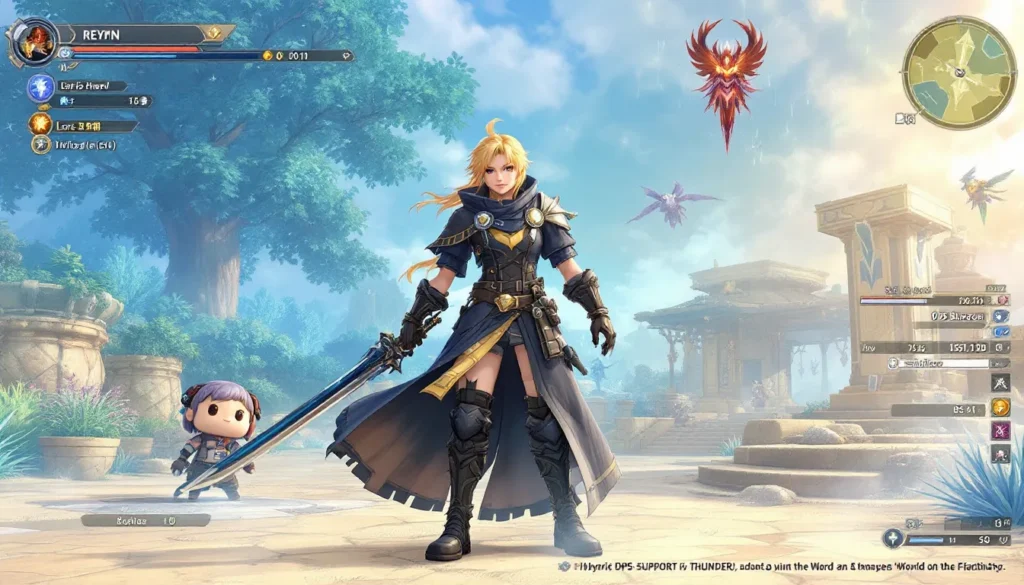
Reynn stands at the heart of World of Final Fantasy, a character that’s equal parts protagonist and enigma. If you’ve rolled through WoFF or are planning your first playthrough, you’ll quickly discover that understanding Reynn goes beyond knowing her attack animations or stat spreads, it’s about grasping how her journey shapes the entire game’s narrative and mechanical depth. This guide pulls together everything you need to master Reynn, from her combat abilities and optimal builds to her complex relationship with her brother Lann and the unforgettable story beats that define her arc. Whether you’re min-maxing her equipment or just trying to figure out why she hits different in certain matchups, we’ll walk through the specifics that matter to serious players.
Table of Contents
ToggleKey Takeaways
- Reynn excels as a hybrid DPS-support character, not a pure mage, and her versatility in World of Final Fantasy comes from balancing physical damage, elemental magic, and party support abilities.
- Prioritize 2-3 complementary job paths for ability point allocation rather than spreading across five lines, and focus on high-tier spells like Firaga, Dual Wield, and status resistance abilities for maximum effectiveness.
- Boss battles require adaptive Reynn builds based on enemy threat profiles—use magical damage against physical bosses, cast reflection and debuffs against magical enemies, and match elemental weaknesses to amplify damage by 50-100%.
- Party synergy trumps individual optimization; Reynn reaches peak performance when paired with Lann for combined damage multipliers and when your team composition addresses elemental coverage gaps your party lacks.
- Transformation abilities and form-switching are essential mechanics that fundamentally change Reynn’s available abilities and stats—ignoring them wastes her adaptive potential and leaves boss encounters unnecessarily difficult.
- Master Reynn’s toolkit early in the game to unlock emergent playstyles across 40+ hours of gameplay, as her character arc mirrors her mechanical growth and rewards players who engage with system depth rather than relying on surface-level strategies.
Who Is Reynn? Understanding The Game’s Protagonist
Reynn is the female half of the protagonist duo in World of Final Fantasy, a 2016 JRPG that blends classic Final Fantasy nostalgia with a fresh, chimera-focused setting. She’s not your typical sword-swinging hero, her design emphasizes strategy, elemental magic, and support capabilities that make her integral to successful team compositions. Players often overlook just how versatile Reynn can be, assuming her lighter build means less damage output. That’s a misconception that costs runs.
What makes Reynn compelling isn’t just her mechanics, it’s her development. She enters the game with memory gaps about her past, and piecing together who she is alongside Lann becomes the emotional throughline of WoFF. Unlike protagonists who know their mission from the jump, Reynn is constantly questioning, adapting, and learning what it means to wield the power of Mirages in a world that’s both wondrous and dangerous.
In terms of accessibility across platforms, World of Final Fantasy landed on PS4 and PS Vita at launch, with a Nintendo Switch version arriving later. This guide focuses on the current console versions where Reynn’s mechanics remain consistent. Her role as protagonist means she’s always available in your party, there’s no unlocking or recruitment phase, which makes early team-building decisions around her particularly important.
Reynn’s Abilities and Combat Skills Explained
Signature Abilities and Moves
Reynn’s combat toolkit centers on balanced offense-defense play with strong elemental options. Her signature move, “Dual Wield,” allows her to equip two weapons simultaneously once learned, dramatically increasing her damage output without sacrificing her support utility. This isn’t a “choose your path” ability, you’ll want it as soon as your jobs and levels permit.
Her magic proficiency is where Reynn truly shines. She gains access to Fire, Blizzard, and Thunder early, with more advanced spells like Firaga and Thundaga unlocking as you progress. The key difference between Reynn and pure mages: she can cast these spells and maintain respectable physical damage. Many guides overlook this hybrid potential, treating her like a dedicated magic user. Don’t fall into that trap.
“Limit Break” abilities vary based on Reynn’s current form (Mirage form or human form) and equipped Mirages, which adds a layer of tactical depth that casual players often don’t explore fully. Her Limit Break as a physical damage dealer differs completely from her magic-focused variant, understanding which form serves your current battle state separates optimized players from the rest.
Another cornerstone ability is “Summon,” which lets Reynn call Mirages into battle. The Mirage you summon inherits stats influenced by Reynn’s equipment and current form, making loadout choices cascade into summon performance.
Class System and Skill Development
World of Final Fantasy uses a flexible class system that lets you customize Reynn’s growth path. She doesn’t lock into a single class, instead, you allocate ability points across multiple job lines simultaneously. This means you could build her as a Spellcaster while still investing in Warrior abilities for physical versatility.
The progression works like this: each ability you unlock costs ability points. Early on, basic spells cost 1-3 points. Late-game utility or powerful offensive abilities cost significantly more. The constraint isn’t level gates, it’s purely resource allocation. This is why veterans often reset Reynn’s abilities partway through the game: your early choices might not reflect your current playstyle.
Critical abilities to prioritize:
- High Elemental Spells (Firaga, Blizzaga, Thundaga)
- Dual Wield (weapon damage multiplication)
- Status Resistance abilities (Poison Guard, Paralyze Guard)
- Esuna or Cleanse (removing debuffs from the party)
Don’t spread points too thin. Dabbling in five different job lines leaves Reynn mediocre at everything. Focus on 2-3 complementary paths, for instance, pairing Spellcaster with Dragoon gives you magic coverage plus physical burst damage. The synergy matters more than breadth.
Reynn’s Story Arc and Character Development
Relationship With Lann
Reynn and Lann’s bond is the emotional core of World of Final Fantasy. They’re siblings separated by circumstance and memory, and their reunion drives much of the early-game narrative tension. What’s fascinating about their dynamic is how it mirrors player choice, depending on dialogue selections and leveling pacing, you can shape their relationship into different emotional territories.
Lann starts as the seemingly carefree sibling, but Reynn quickly realizes his humor masks deeper insecurity about his role in events they can’t remember. This creates a push-pull dynamic that pays off narratively in later chapters. From a gameplay perspective, understanding their emotional beats helps you appreciate why certain mechanical choices make sense, like how Reynn’s support abilities become more potent as the story demands it.
Their relationship also manifests in combat. When both siblings are in your active party and use specific combination abilities together, damage multipliers increase. This isn’t a throwaway mechanic: it’s baked into the optimal endgame strategy. Veteran players actually separate them for single-target bosses but reunite them for multi-enemy encounters where combination damage shines.
Memorable Plot Points and Turning Moments
Reynn experiences three major turning points that redefine her combat role and narrative weight. The first occurs roughly 8-10 hours in when she gains access to “Transformation Abilities,” allowing her to assume Mirage forms. This isn’t cosmetic, it fundamentally changes her stat distribution and available abilities. Suddenly, Reynn isn’t bound to human-form limitations anymore.
The second turning moment involves a plot revelation about Reynn’s past that directly impacts how players perceive her earlier dialogue choices. Without spoiling specifics, this moment shifts her from sympathetic protagonist to something more complex. Mechanically, it correlates with unlocking “Secret Abilities” that recontextualize her role in combat.
The final arc sees Reynn confronting the core conflict of WoFF’s story, and her abilities unlock their fullest potential here. Players who’ve invested in her magic and support tools suddenly realize how prescient those early choices were. This narrative-mechanical alignment is rare in JRPGs, most games compartmentalize story and system design. WoFF doesn’t.
For players seeking depth, replaying Reynn’s story with knowledge of these turns reveals foreshadowing everywhere. Her conversations about memory and purpose take on new weight. This also affects how you’d optimize her build on a New Game+ run.
Building the Ultimate Reynn: Optimal Loadouts and Equipment
Best Weapons and Armor Combinations
Reynn’s optimal endgame loadout balances three factors: physical damage, magical power, and survivability. Her signature weapons, Traveler’s Sword early game, scaling to Murakumo or Genji Sword in lategame, offer solid attack values without sacrificing magic stats the way pure greatswords do.
The controversial choice many players miss: dual-wielding a Genji Sword with a Healing Wand. Yes, a Healing Wand. This setup lets Reynn maintain DPS while functioning as emergency group healer without dedicating a pure healer slot. This frees your party composition for more offensive coverage. It sounds unconventional because it is, but the math works.
For armor, prioritize pieces that offer Magic Defense and Elemental Resistance alongside physical defense. Reynn doesn’t need the heaviest armor in the game: she needs balanced defense. A typical endgame setup looks like:
- Head: Circlet of Magic (boosts spell power +15%)
- Body: Wizard’s Robe or Mirage Slayer Mail (magic defense focus)
- Accessory Slot 1: Genji Bracer (all stats +10%)
- Accessory Slot 2: Mystic Ring (elemental resistance +20%)
This loadout assumes you’re running Reynn as a hybrid DPS-support. If your party already has dedicated healing, swap the Healing Wand for a damage-focused weapon like Excalibur and adjust armor toward pure offense.
Accessories and Stat Optimization
Accessory choices create surprising damage multipliers that guide your strategy. The Strength Ring adds flat attack power, the Magic Ring amplifies spell damage, and the Rainbow Ring balances both. For Reynn, the Rainbow Ring often outperforms single-stat accessories because her hybrid nature means 50% magic/50% physical damage distribution.
Late-game accessory hunting should target:
- Genji Bracer (universal stats increase)
- Mystic Ring (elemental damage amplification)
- Ring of Fortune (critical hit rate +15%)
- Wisdom Ring (spell power scaling)
Stat optimization priorities for Reynn:
- Vitality (HP pool, survivability matters more than raw damage)
- Magic Power (spell damage scales exponentially from magic investments)
- Strength (physical damage consistency)
- Intelligence (spell accuracy and effect rates)
Many guides recommend stacking Strength early and converting to Magic later. That’s suboptimal. Invest roughly 40% into Magic from the mid-game onward. Reynn’s role demands she stay relevant in both damage types, not pivot entirely.
The stat distribution across your active party matters too. If Lann is your pure physical damage dealer, Reynn should lean magic-heavy to avoid redundancy. If your team’s lacking magical coverage entirely, Reynn goes full mage even though losing some physical damage, team synergy trumps individual optimization.
Advanced Combat Strategies Using Reynn
Boss Battle Tactics
Reynn’s role in boss encounters shifts dramatically based on whether you’re facing physical damage dealers, magical attackers, or mixed threats. Against heavy physical bosses (think armored enemies with melee-focused patterns), Reynn becomes your primary magical damage source while your physical damage dealers work the flanks. This means prioritizing high-tier magic spells and supporting them with stat-boosting abilities like Surge or Focus.
Against magical bosses, Reynn’s utility shines differently. She can cast Reflection to bounce magic attacks back, apply Elemental Resistance buffs specific to the boss’s element, or use Dispel to strip enemy stat buffs before they land devastating attacks. The actual damage she deals matters less: positioning her to counter the boss’s specific threat profile matters everything.
A critical tactic many players sleep on: staggering enemy ability rotations using Reynn’s debuffs. If a boss has a predictable pattern (big attack every 3 turns), casting Paralyze or using abilities that reduce enemy turn count actually shifts the entire battle’s rhythm. You buy time for your healers to recover and your physical damage dealers to position for bigger hits.
For solo-Reynn strategies (challenge runs or specific encounters), the key is kiting and spell rotation management. Reynn’s lower physical defense means getting hit repeatedly is death, keep her mobile, cast healing spells between offensive rotations, and rely heavily on elemental advantage matching.
Team Composition and Synergy
Reynn functions best in parties where her role is clearly defined. The classic setup pairs her with Lann as physical damage, a pure healer (like a dedicated Cleric), and a tank character for enemy aggro control. This arrangement lets Reynn go full offense-support hybrid without needing to cover healing gaps.
Alternative high-performance composition: Reynn (hybrid DPS-support), Lann (physical damage), Tama (magic damage and utility), and a Mirage Stacks for flexibility. This setup sacrifices a dedicated tank but gains flexibility through Mirage form switching, which many endgame players prefer.
Synergy mechanics to exploit:
- Elemental Stacking: If Reynn uses Fire spells, pair her with Mirages that apply Fire weakness to enemies. Boss resistances drop, and Reynn’s damage scales upward.
- Buff Timing: Coordinate Reynn’s Focus (spell power +30%) with Lann’s biggest physical rotation. You’re not just adding bonuses, you’re multiplying damage windows.
- Chain Abilities: Certain character combinations unlock bonus abilities when used in sequence. Reynn and Lann have exclusive chains that deal 40-60% more damage than solo abilities.
Party building feels like theory-crafting in other RPGs, but in WoFF it’s mechanically critical. A mediocre Reynn with a synergistic team outperforms a max-geared Reynn in a clashing composition. This is why endgame players constantly reshape their active party based on upcoming encounters rather than committing to one fixed team.
Reynn Vs. Lann: Comparing The Siblings’ Strengths
Comparing Reynn and Lann is less about declaring one “better” and more about understanding their complementary strengths and when each excels.
Reynn’s Advantages:
- Magical versatility (four elements + support magic vs. Lann’s limited spells)
- Survivability through healing (can self-heal and cleanse debuffs)
- Party support density (stat buffs, elemental resistance, status cures)
- Consistent mid-range damage (doesn’t rely on critical hits or risky positioning)
Lann’s Advantages:
- Peak physical damage output (highest single-hit damage in the game when buffed)
- Aggression reward mechanics (abilities that hit harder based on consecutive hits)
- Speed stats (faster turn order means more actions per round)
- Crowd control through physical effects (stun, knockback, disarm via weapon skills)
In a vacuum, Lann outdamages Reynn significantly once both are fully geared. A Lann with maxed physical abilities and optimized equipment hits for 15,000+ per round: Reynn peaks around 8,000-10,000 (distributed across multiple spells). But in context of party performance, Reynn’s support value often produces higher overall damage through buff multipliers and enemy debuff applications.
Late-game strategy typically divides roles: Lann as primary DPS, Reynn as DPS-support hybrid. This asymmetry isn’t balance failure, it’s intentional design that mirrors their narrative arc. Lann’s straightforward, direct approach complements Reynn’s strategic, layered approach.
For speedrunners and optimizers, party configuration sometimes benches one sibling entirely, using Mirage substitutes for specific dungeons. This is valid but misses the narrative payoff of playing both characters through the story. The game rewards you mechanically for keeping both siblings active, which is rare in JRPGs that often punish emotional choices with mechanical disadvantage.
Common Mistakes Players Make With Reynn
Mistake 1: Treating Her Like a Pure Mage
Reynn works best as a hybrid. Locking her into magic-only builds starves her of physical damage utility and leaves her vulnerable when enemies resist her spell element. Always maintain physical weapon capability alongside magic power.
Mistake 2: Neglecting Her Support Abilities Early
Players often frontload attack damage abilities and ignore support spells like Barrier or Enhance until endgame. This is backwards. Learning support abilities early lets you experiment with party dynamics sooner, and support abilities scale well regardless of level. You’re not sacrificing damage potential by learning these earlier.
Mistake 3: Underestimating Stat Synergy
Equipping Reynn with pure magic-focused armor while pairing her with physical damage dealers creates redundancy. Your party needs coverage across damage types and resistances. If your team’s already magic-heavy, build Reynn toward physical or support roles instead.
Mistake 4: Spreading Ability Points Across Too Many Jobs
Reynn’s ability point system tempts you to taste every class available. Leveling five different job lines to basic levels leaves her weaker than focusing three lines deeply. Specialization beats generalization in WoFF.
Mistake 5: Ignoring Transformation Mechanics
Reynn’s ability to assume Mirage forms fundamentally changes her available abilities and stats. Many players stick to human form because they’re comfortable with it, missing that certain bosses become trivial if you transform into form X with specific abilities loaded. Form switching is a puzzle mechanic, not optional flavor.
Mistake 6: Not Timing Party Composition Around Upcoming Bosses
WoFF telegraphs boss elements and attack patterns pretty clearly once you’ve seen them. Adjusting Reynn’s loadout and active party composition between encounters takes 2 minutes and can halve fight duration. Treating party building as a static thing wastes her adaptive potential.
Mistake 7: Neglecting Elemental Advantage
Reynn has access to all four primary elements (Fire, Ice, Lightning, Water through expanded magic). Matching her spell to enemy weakness amplifies damage by 50-100%. Many players default to their highest-damage spell regardless of matchup, this is mathematically suboptimal. Spend the extra seconds checking enemy types and adjusting spells.
These mistakes aren’t trivial oversights that marginally reduce effectiveness. They’re the difference between clearing boss fights in 3-4 minutes versus 10-15 minutes, or between consistently viable party comps versus needing to grind extra levels to brute-force encounters.
Conclusion
Mastering Reynn transforms World of Final Fantasy from a pleasant throwback into a mechanically deep experience where every loadout choice and ability allocation compounds toward emergent playstyles. She’s not flashy, she doesn’t have the raw damage ceiling of Lann or the pure healing throughput of dedicated support characters. What she offers is versatility backed by solid numbers and narrative weight that makes her decisions matter.
The core takeaway: Reynn rewards players who engage with the game’s systems rather than coast through with surface-level strategies. Building her optimally means understanding party synergy, respecting elemental matchups, timing transformations around specific encounters, and accepting that her role shifts based on what your team already covers. That’s not complexity for complexity’s sake, it’s design that mirrors her character arc of growth and adaptation.
If you’re returning to World of Final Fantasy or starting fresh in 2026, spending time learning Reynn’s toolkit early pays dividends across 40+ hours of gameplay. She’s the protagonist for a reason, and once you grasp what makes her tick, you’ll wonder why she felt underpowered in your first playthrough. The power was always there, you just needed the guide to find it.