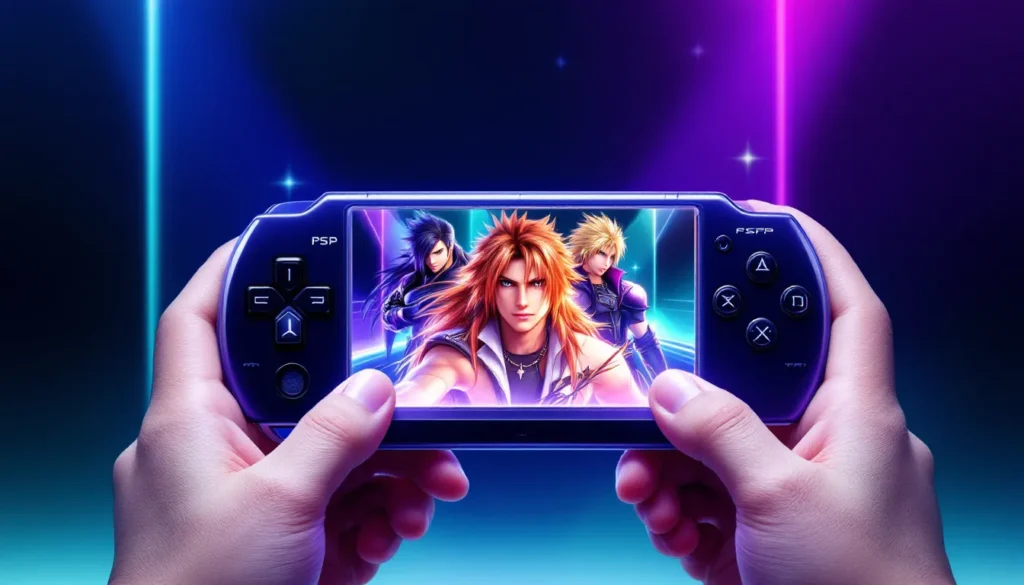
The PSP’s lifespan coincided with some of Final Fantasy’s most experimental and beloved handheld releases. From 2004 to 2012, Square Enix pumped out an impressive lineup of Final Fantasy games on PlayStation Portable, some of which are still regarded as genre-defining titles today. Whether you’re hunting for nostalgia or curious about what made final fantasy psp games special, this guide covers everything you need to know about these portable classics. These weren’t just shrunk-down versions of console experiences: they were crafted specifically to push the PSP’s hardware and deliver meaningful stories that resonated with fans worldwide.
Table of Contents
ToggleKey Takeaways
- The Final Fantasy PSP library featured four major titles—Crisis Core, Dissidia, Dissidia 012, Type-0, and Dirge of Cerberus—each offering distinct gameplay styles from action-RPG to fighting games and third-person shooters.
- Crisis Core: Final Fantasy VII stands as the flagship Final Fantasy PSP game, selling over 5 million copies and pioneering hybrid combat that blended real-time action with RPG progression through its innovative Materia Fusion system.
- Type-0 pushed PSP hardware to its limits with ambitious graphics and squad-based permadeath mechanics, influencing future Final Fantasy titles like XV with its moral storytelling and tactical combat design.
- Crisis Core Reunion (2023) and PPSSPP emulation are the most accessible ways to experience Final Fantasy PSP games today, though original cartridges remain collectible at $15–80 depending on rarity and condition.
- These games proved handheld platforms deserved serious, experimental RPG content by designing specifically for the PSP rather than shrinking down console experiences, leaving a lasting impact on how the franchise approaches combat and narrative.
Which Final Fantasy Games Were Released on PSP
The PSP received a surprisingly deep Final Fantasy catalog, with four major titles that each brought something different to the table. Unlike its Nintendo DS competitor, the PSP’s Final Fantasy library skewed toward action-oriented gameplay and cinematic storytelling. Understanding which games landed on the platform helps clarify where the PSP fit into Square Enix’s larger handheld strategy.
Crisis Core: Final Fantasy VII
Crisis Core: Final Fantasy VII launched in Japan on September 13, 2007, and in North America on March 25, 2008. This action RPG became the flagship PSP Final Fantasy title and remains one of the system’s most celebrated games. You play as Zack Fair, a first-class SOLDIER operative, during the events leading up to the original Final Fantasy VII.
The combat system uses real-time action mechanics tied to a digital slot machine called the Materia Fusion system. Landing matching symbols on the reel grants powerful abilities, summons, or healing during battle. It’s random but strategic, understanding RNG patterns and ability timing separates skilled players from casual ones.
The story explores Zack’s relationship with Cloud Strife and Aerith Gainsborough, filling narrative gaps that fans spent years speculating about. Crisis Core sold over 5 million copies worldwide and proved that the PSP could handle console-quality Final Fantasy experiences. The game later received a remake, Crisis Core: Final Fantasy VII Reunion, in 2023, which brought the story to PS5, Xbox Series X
|
S, and Nintendo Switch.
Dissidia and Dissidia 012
Dissidia Final Fantasy launched in Japan on December 26, 2008, and reached North America on August 25, 2009. This fighting game united iconic Final Fantasy protagonists and antagonists in a 1v1 tournament-style format. The appeal wasn’t just fan service, the combat depth and massive roster made it a legitimate competitive title.
Each character had a unique fighting style tied to their original games. Squall used ranged gunblade attacks, Sephiroth leveraged speed and one-hit potential, and Cloud balanced power with decent speed. The EX System rewarded aggressive play by building EX Gauge for powerful special moves, creating dynamic risk-reward decision-making.
Dissidia 012 Final Fantasy (released as Dissidia 012[duodecim] Final Fantasy in Japan) launched on March 3, 2011 in North America. It added new characters, stages, and a robust story mode called 012 Episode. The game expanded the roster to include fan favorites like Laguna, Yuna, and Gilgamesh, while refining combat balance from the original.
Both Dissidia titles were multiplayer-focused, supporting ad-hoc wireless and later infrastructure play. The community remained active throughout the PSP’s lifespan, and modding communities on PC emulators have kept online play alive.
Final Fantasy VII: Dirge of Cerberus – Lost Episode
Final Fantasy VII: Dirge of Cerberus – Lost Episode released alongside Dirge of Cerberus on PS2 in January 2006. This PSP exclusive offered a tangential story featuring Vincent Valentine in a new conflict set after the main Dirge of Cerberus narrative. The game played as a third-person shooter with RPG elements, a significant departure from traditional Final Fantasy turn-based combat.
The control scheme leveraged the PSP’s analog stick for aiming and movement, which felt novel on handheld at the time. Weapon variety was limited compared to its PS2 counterpart, and the story was more straightforward. It’s often overlooked by fans but remains an interesting oddity in the FF7 extended universe.
Final Fantasy Type-0
Final Fantasy Type-0 released in Japan on October 27, 2011, and didn’t reach North America officially until 2015 as Final Fantasy Type-0 HD on PS4 and Xbox One. But, the original PSP version is the title we’re discussing here. This action RPG featured a military academy setting and squad-based gameplay that felt fresh for the franchise.
You control a group of cadets called Oratorio in real-time combat against an empire called Militesi. The game featured permadeath mechanics, if characters died in battle, they stayed dead until you revived them at bases. This created genuine tension and forced tactical thinking.
Type-0 had the most ambitious technical showcase on PSP hardware. High-polygon character models, detailed environments, and cinematic cutscenes pushed the system to its limits. The port to PS4 and Xbox One expanded the audience, but longtime fans consider the PSP version the original experience, even though its technical limitations.
Game Features and Gameplay Mechanics
Final Fantasy PSP titles varied significantly in their mechanical approach, reflecting different design philosophies and target audiences. Understanding these differences helps you pick which games align with your playstyle.
Combat Systems Across PSP Titles
Crisis Core pioneered a hybrid system that blended real-time action with RPG progression. Attacks and abilities were input-based, but stats and equipment mattered significantly. Battles felt dynamic, you’d dodge incoming attacks, manage cooldowns on abilities, and watch your Materia Fusion reel spin for critical moments. The system rewarded both mechanical skill and character optimization.
Dissidia went full fighting-game direction. Combat used a Brave/HP system where you dealt Brave damage first, then converted accumulated Brave into HP damage. It sounds convoluted but created a rhythm where you’d build momentum through multiple hits before landing a knockout blow. Frame data and combo timing mattered. This isn’t for players wanting traditional turn-based Final Fantasy.
Type-0 emphasized squad-based real-time combat. You controlled one character at a time but could swap party members mid-battle. Each character had distinct roles, mages, ranged units, melee damage dealers. The best strategy involved understanding matchups and rotating characters to exploit enemy weaknesses.
Dirge of Cerberus – Lost Episode was the outlier: a third-person shooter. You aimed weapons manually, managed ammunition, and used cover mechanics. It felt less like Final Fantasy and more like a military action game with Final Fantasy flavor.
Story and Character Development
Final Fantasy games live or die on their narratives, and PSP titles delivered meaningful stories even though hardware limitations. Crisis Core told a complete, emotionally resonant arc about a soldier discovering corruption in his organization and sacrificing everything for his friends. The ending hits hard, you know Zack’s fate from FF7, but seeing it unfold is devastating.
Type-0 presented a darker, morally ambiguous tale about war and the cost of victory. Your squad suffers permanent losses. NPCs betray you. The ending doesn’t provide cathartic resolution. It’s unconventional for a handheld Final Fantasy and stands out because of it.
Dissidia’s story mode focused on a tournament between heroes and villains orchestrated by gods. It’s light on character development compared to other titles but served as a fan-service celebration of the franchise. The 012 update deepened the narrative by exploring character motivations across different timelines.
Dirge of Cerberus – Lost Episode had a straightforward plot involving Vincent uncovering conspiracies. It lacked the narrative depth of other PSP entries but provided adequate context for Vincent’s character.
Graphics and Audio Performance
The PSP’s GPU was a significant step up from GBA but light-years behind PS2. Crisis Core pushed closest to PS2 quality, featuring detailed character models and intricate environments. Summon animations were cinematic, calling down Knights of Round felt impactful. But, frequent loading screens interrupted exploration.
Type-0 aimed for visual ambition. Character models were sharp, and environments showcased lighting effects uncommon on PSP. The downside was frame rate dips during intense battles. The PS4 port revealed how ambitious the original design was, the handheld version was impressive but clearly compromised.
Dissidia prioritized performance over graphical fidelity. Characters were stylized rather than hyper-realistic, which allowed smooth 60 FPS combat. Special effects were flashy without being technically demanding. This design philosophy meant Dissidia aged better visually than more technically ambitious titles.
Audio across all titles benefited from Kota Suzuki and Naoki Yoshida compositions. Crisis Core featured orchestral arrangements that rivaled console soundtracks. Dissidia included remixed classic Final Fantasy themes. Type-0 delivered bombastic military orchestration. The PSP’s audio hardware was competent, and developers took advantage of it.
How to Play Final Fantasy PSP Games Today
If you didn’t play these games during the PSP’s active lifespan, acquiring and playing them in 2026 requires understanding your options. The PSP is no longer manufactured, and finding original hardware in good condition costs real money.
Acquiring Physical and Digital Copies
Physical PSP cartridges are increasingly expensive. Crisis Core commands $40-60 for a complete-in-box copy, depending on condition. Dissidia and Dissidia 012 average $30-50. Type-0 is rarer outside Japan: English copies run $50-80. Dirge of Cerberus – Lost Episode is the most affordable at $15-25.
If you own a PSP, the digital storefront is technically still accessible on original hardware, though Sony discontinued the service for PS Vita. As of 2026, PSP digital purchases are mostly inaccessible through official channels unless you’re a legacy account holder.
Crisis Core received a full remake in 2023, bringing the story to modern platforms. If you want Zack’s story without PSP hardware, Crisis Core: Final Fantasy VII Reunion on PS5, Xbox Series X
|
S, and Nintendo Switch is the definitive version. It includes updated graphics, refined combat, and additional story content. The original PSP version still holds charm for players seeking the handheld experience.
Recent ports have also updated other franchises. Final Fantasy Games on Switch have expanded the franchise’s handheld presence, offering alternatives to PSP gaming.
Emulation Options and Alternatives
PPSSPP, the most popular PSP emulator, runs on PC, Android, and some Linux distributions. The emulator is accurate and supports upscaling beyond the PSP’s native 480×272 resolution. With a mid-range PC, you can run PSP games at 1080p or higher with improved textures through plugins.
Setting up PPSSPP requires obtaining game files, either through dumping your own PSP cartridges or other means. That’s where legality gets murky. Square Enix has shown no interest in official re-releases for most PSP titles (Crisis Core Reunion being the exception), which creates a gray area for preservation.
Android emulation is also viable. PPSSPP runs well on modern flagship phones, though control schemes can feel cramped without external controllers. Bluetooth controllers are inexpensive and significantly improve the experience.
When researching options, resources like RPG Site guides often cover emulation approaches for classic JRPGs, including PSP titles. The site maintains updated information on compatibility and optimization.
Best Final Fantasy PSP Games for Different Player Types
Not all PSP Final Fantasy games appeal to everyone. Your gaming preferences should dictate which titles deserve your time.
For Action-Oriented Gamers
Crisis Core is the clear winner here. The real-time combat feels responsive, and Materia Fusion adds strategic depth beyond button-mashing. You’re constantly managing cooldowns, positioning, and ability selection during fights. The skill ceiling is legitimate, boss battles on hard difficulties require understanding attack patterns and executing precise ability timing.
Type-0 is your second choice if you prefer squad-based tactics. Swapping characters mid-battle creates dynamic moments. Learning each character’s optimal matchups against enemies transforms combat from simple action into something more methodical. The permadeath mechanic adds weight to decisions: you can’t revive everyone immediately.
Dissidia suits players interested in fighting-game mechanics. If you enjoyed titles like Street Fighter or Tekken, Dissidia’s depth will click. The Brave/HP system creates layers of strategy. Matches aren’t decided by who mashes buttons faster, they’re won by understanding positioning, spacing, and momentum management.
Skip Dirge of Cerberus – Lost Episode unless you specifically want a shooter experience. It’s the weakest action entry and feels less polished than the others.
For Story-Driven Enthusiasts
Crisis Core dominates this category. The narrative explores themes of identity, manipulation, and sacrifice. You watch a protagonist discover uncomfortable truths about his world and choose heroism even though knowing it’ll destroy him. The emotional payoff is substantial, especially if you’ve played the original Final Fantasy VII. The story justifies every mechanical choice, combat urgency reflects Zack’s desperation.
Type-0 offers ambitious, morally gray storytelling. It doesn’t coddle players with clear good-versus-evil narratives. Your squad loses members permanently. The empire has understandable motivations. By the ending, you’re questioning whether your victory was worth the cost. If you want Final Fantasy that challenges instead of comforts, Type-0 delivers.
Dissidia’s story is lighter. It’s fan service, bringing together protagonists and antagonists in a tournament framework. The appeal is seeing Cloud and Sephiroth duel or discovering how Kefka responds to being trapped with his enemies. 012 deepened the narrative, but it’s still secondary to the gameplay experience.
Avoid Dirge of Cerberus – Lost Episode for story depth. It’s a straightforward action plot without the character development or thematic richness of other entries.
For Competitive and Multiplayer Fans
Dissidia was the multiplayer centerpiece. The franchise’s only fighting-game entry supported ad-hoc wireless for local 1v1 battles and later infrastructure play through PlayStation Network. The competitive community organized tournaments, and high-level play was legitimately impressive. If you have PSP hardware and friends with copies, Dissidia’s multiplayer is still engaging.
Dissidia 012 refined the experience with balance patches and a larger roster. It’s the superior multiplayer package. The community remained active during the PSP’s lifespan and has seen modest resurgence through emulation.
Crisis Core supports two-player ad-hoc multiplayer through specific battle modes. It’s less competitive and more cooperative, you’re working together against challenges. It’s fun but not central to the experience.
Type-0 lacks multiplayer options, making it unsuitable for competitive players seeking squad-based or PvP experiences.
For competitive players in 2026, emulation through PPSSPP enables online play through netcode modifications that the original PSP games didn’t have. Communities have developed workarounds making Dissidia playable online, something impossible on original hardware unless you modded your PSP.
Nostalgia and Legacy of Final Fantasy on PSP
The PSP’s Final Fantasy lineup represents a unique era in the franchise, a time when Square Enix was willing to experiment on handheld without requiring console ports. These games mattered beyond their immediate sales figures.
Impact on the Franchise and Gaming Community
Crisis Core established Zack as a compelling character beyond being Cloud’s predecessor. Before the game, Zack was a plot device, mentioned but never truly known. Crisis Core made players emotionally invested in his story. The original Final Fantasy VII Remake and Remake’s sequels owe a debt to Crisis Core’s character work. It proved that handheld games could deepen lore and character arcs for flagship franchises.
Dissidia’s impact was broader. It demonstrated that fighting games could work on handhelds and that Final Fantasy fans craved character interaction across installments. The success spawned Dissidia Final Fantasy NT on arcade and PS4, continuing the franchise. While NT didn’t achieve Dissidia’s cult status, it originated from handheld success.
Type-0 influenced how Square Enix approached war narratives in Final Fantasy. The game’s moral ambiguity and willingness to kill important characters without emotional fanfare became a template. Final Fantasy XV borrowed Type-0’s squad-based gameplay concepts. The later port’s critical reception proved the original PSP vision had merit.
Dirge of Cerberus – Lost Episode had minimal impact. It’s remembered more as a curiosity than a meaningful entry. But, Vincent Valentine’s character development across Dirge titles (PS2 and PSP) established him as a complex, damaged character beyond his Advent Children portrayal.
Community impact: The PSP Final Fantasy titles created discussion across gaming forums. When Crisis Core released, fans theorized about narrative implications. Dissidia tournaments generated competitive passion. Type-0’s permadeath mechanic sparked debate about difficulty and emotional stakes in JRPGs. These weren’t passive gaming experiences, they encouraged engagement.
Why These Games Still Matter in 2026
First, most of these games aren’t available on modern platforms. Unlike Final Fantasy VII Remake or recent entries, Crisis Core and Type-0 PSP versions require hunting down legacy hardware. This scarcity creates preservation importance. Gaming historians view these titles as essential documentation of handheld JRPG design in the late 2000s.
Second, design philosophy. Modern Final Fantasy emphasizes action over turn-based combat. Crisis Core pioneered hybrid systems that influenced how Square Enix approached combat modernization. Understanding its mechanics explains why Final Fantasy XV and XVI moved toward real-time engagement.
Third, community. Emulation communities continue maintaining these games. PPSSPP development ensures Crisis Core, Dissidia, and Type-0 remain playable on modern hardware. Fan translations for Type-0 keep the English version accessible even though never receiving official localization on PSP. These aren’t abandoned, they’re actively preserved.
Fourth, storytelling experimentation. Type-0’s narrative boldness influenced how writers at Square Enix approach Final Fantasy. The willingness to leave moral questions unanswered in a handheld game proved audiences would embrace complexity in portable experiences. Recent JRPG reviews often benchmark modern titles against Type-0’s thematic sophistication.
Fifth, there’s practical value. If you’re learning JRPG design or studying how franchises expanded to handheld markets, the Final Fantasy Archives on Gamerstreamzone provides comprehensive documentation. These games offer lessons about audience segmentation and platform-specific design.
In 2026, Crisis Core Reunion proved there’s still appetite for handheld Final Fantasy stories adapted for modern platforms. This wouldn’t have happened without the original PSP version demonstrating that portable Final Fantasy could resonate deeply. The legacy isn’t nostalgic sentiment, it’s active influence on how the franchise evolves.
Conclusion
Final Fantasy PSP games occupy a fascinating niche in the franchise’s history. They weren’t main entries, yet they delivered substantial narratives, innovative mechanics, and technical ambition that proved handheld platforms deserved serious RPG content. Crisis Core told a devastating story that deepened Final Fantasy VII’s lore. Dissidia created a fighting game that resonated with competitive and casual players alike. Type-0 delivered morally complex storytelling that influenced the franchise’s future direction. Even Dirge of Cerberus – Lost Episode contributed to the broader Final Fantasy VII extended universe, even though being the weakest entry.
What made these games special wasn’t cutting corners for handheld, it was designing specifically for the platform. Crisis Core’s Materia Fusion system worked because it accommodated the PSP’s control limitations while adding genuine strategy. Dissidia’s fighting-game approach proved handhelds could host legitimate competitive experiences. Type-0’s permadeath mechanics created emotional weight that wouldn’t have landed as hard on a console.
In 2026, accessing these games requires effort. Crisis Core Reunion offers the easiest entry point on modern platforms, but it’s not identical to the original. Hunting down physical PSP copies is expensive. Emulation is viable but operates in legal gray areas. Even though friction, dedicated players continue discovering why these titles earned devoted fanbases. They represent a specific moment when Square Enix trusted handheld platforms with experimental design and substantial narratives.
If you’re a Final Fantasy fan with interest in the franchise’s history, or a JRPG enthusiast curious about how portability influenced game design, exploring the PSP library is worthwhile. These games aren’t relics, they’re active texts that shaped how modern JRPGs approach combat, storytelling, and platform-specific design.