The Buster Sword isn’t just a weapon, it’s iconic. When you think of Final Fantasy, particularly Final Fantasy VII, the image that likely flashes through your mind is Cloud Strife wielding that oversized blade with one hand like it weighs nothing. The Final Fantasy 7 Buster Sword has transcended the gaming world to become a cultural artifact recognized by people who’ve never played a single JRPG. Whether you’re a veteran player exploring the Remake, a newcomer diving into the original, or someone curious about why this particular weapon matters so much, understanding the Buster Sword’s role across the franchise provides insight into both game design and gaming culture itself.
Table of Contents
ToggleKey Takeaways
- The Final Fantasy Buster Sword is Cloud Strife’s iconic weapon that transcends gaming as a cultural artifact recognized globally, representing both the character’s identity journey and the entire Final Fantasy franchise.
- Designed by Tetsuya Nomura with narrative intentionality, the Buster Sword’s oversized angular design mirrors Cloud’s internal struggles and blends industrial steampunk aesthetics with traditional fantasy elements.
- The weapon remains mechanically viable across all versions of Final Fantasy VII, featuring two Materia slots that provide flexibility for customization and playstyles from early game through endgame challenges.
- In the 2020 Final Fantasy VII Remake, the Buster Sword was fundamentally reimagined with weapon-specific skill trees, enhanced visual fidelity, and new abilities like Operator and Infinity’s End that reflect modern game design.
- The Buster Sword’s cultural impact extends beyond gaming into merchandise, cosplay, anime references, and Super Smash Bros., making it one of gaming’s most recognizable weapons alongside the Master Sword.
- Understanding the Buster Sword reveals how intentional visual design and narrative integration create lasting gaming legacy, ensuring its relevance across decades and multiple game platforms.
What Is The Buster Sword?
Origin And Design
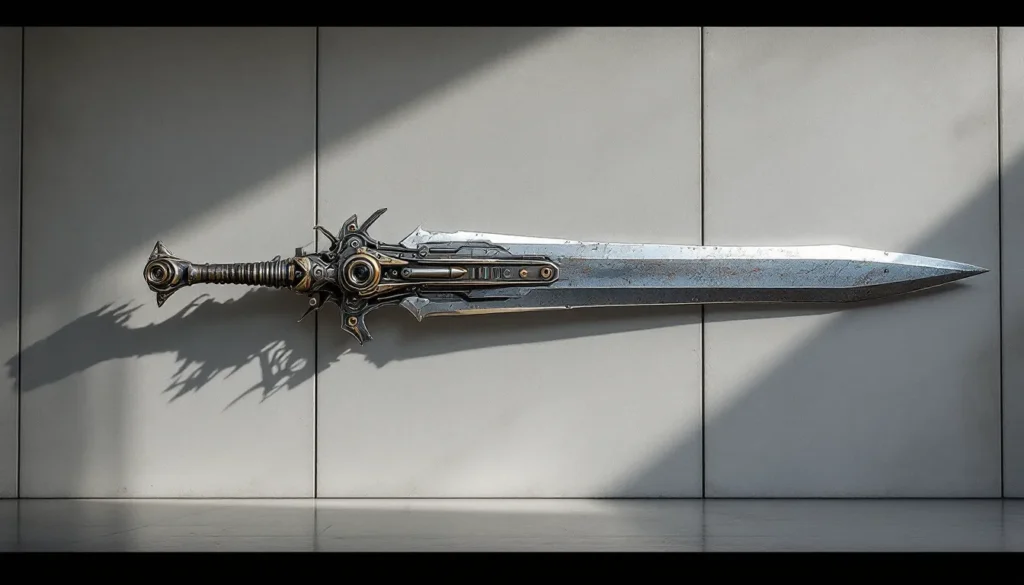
The Buster Sword first appeared in Final Fantasy VII as Cloud’s starting weapon and signature tool throughout the entire game. It’s a massive, oversized sword, roughly as tall as Cloud himself, with a distinctive angular design that became instantly recognizable. The blade features a cross-guard and what looks almost like a buster rifle-style magazine chamber near the hilt, giving it a sci-fi aesthetic that perfectly matched the game’s Midgar setting.
Designer Tetsuya Nomura created the Buster Sword with Cloud’s character arc in mind. The weapon’s imposing size mirrors Cloud’s internal struggle and gradually-revealed identity throughout the story. It’s not just functional: it’s narrative design translated into steel. The dramatic, angular geometry makes it stand out from traditional fantasy swords, which was intentional, Final Fantasy VII blended industrial steampunk visuals with traditional fantasy elements, and the Buster Sword sits right at that intersection.
The sword’s construction also tells a story. Players later discover that Cloud’s weapon is actually a Buster Sword with a One-Handed sword as the blade, a detail that adds layers to character understanding. This modular design philosophy influenced how weapons work throughout the Remake versions.
Significance In The Final Fantasy Franchise
While the Buster Sword originated in VII, it’s become far more than a single game’s weapon. It represents Final Fantasy as a whole, mentioning the Buster Sword to anyone remotely familiar with gaming triggers immediate recognition. That’s rare. Most RPG weapons fade into memory, but this one persists.
The weapon carries weight beyond its in-game stats. It symbolizes Cloud’s journey, making appearances across spin-offs, remakes, and cameos that span decades. When other Final Fantasy protagonists appear in crossovers, like Final Fantasy Characters in Kingdom Hearts, Cloud almost always brings the Buster Sword with him. It’s his signature, his calling card.
Within the franchise’s lore, the Buster Sword represents the legacy of resistance against oppression. That’s not coincidental. Square’s narrative designers understood that iconic visual design carries meaning far deeper than base attack power.
The Buster Sword In Final Fantasy VII
Cloud Strife’s Iconic Weapon
Cloud doesn’t just carry the Buster Sword, he is the Buster Sword in most players’ minds. From the moment you gain control of him in Midgar’s slums, this blade is your constant companion through 40-100+ hours of gameplay, depending on how deep you go into side content.
What makes Cloud’s relationship with the Buster Sword different than, say, Sephiroth’s relationship with his iconic One-Winged Angel theme, is that Cloud’s initial mastery of the weapon is itself a lie he’s constructed. This makes the weapon narratively sophisticated, as Cloud’s understanding of himself shifts, so does his connection to the blade. It remains his weapon, but its meaning transforms.
Throughout both the original 1997 release and the 2020 Remake, the Buster Sword features prominently in cutscenes, marketing materials, and character development. It’s Cloud’s anchor to the narrative. When he’s confused about his identity, the weapon represents what’s real. When he doubts himself, it’s the one constant.
The Cloud final fantasy sword has appeared in nearly every piece of official artwork, merchandise, and promotional material since 1997. That’s not marketing accident, it’s intentional branding that reinforces character identity.
Stats And Combat Mechanics
Let’s talk numbers. In the original Final Fantasy VII (PlayStation, PC, Switch versions all maintain the same base mechanics), the Buster Sword starts Cloud with:
- Attack Power: 15 (modest for a protagonist’s starting weapon, but reflects his gradual power scaling)
- Hit Rate: 100% (reliable, never misses)
- Effect: None inherent, but it accepts Materia slots for customization
Most importantly, the Final Fantasy buster sword accepts Materia, which is the game’s primary magic and ability system. This makes it incredibly flexible throughout the game. You can outfit it with damage-enhancing Materia, healing spells, status effects, summons, whatever fits your playstyle.
In combat, Cloud’s signature Limit Break animations feature the Buster Sword prominently. Abilities like Blade Beam, Climhazzard, and Finishing Touch all showcase the weapon’s oversized proportions through dramatic visual effects. The 1997 original’s sprite work exaggerated the blade’s size in a way that still looks great on Switch, though the 2020 Remake provides significantly more detailed combat animations.
By endgame, you’ll upgrade the Buster Sword through equipment crafting, evolving it into stronger forms that maintain its basic identity while providing better stats. But, you can also swap to entirely different weapons. Many endgame builds actually use alternative weapons, but veteran players frequently keep the Buster Sword equipped anyway, because attachment matters in RPGs. The Remake’s Version 1.4 update (February 2024) rebalanced several weapons, but the Buster Sword remained competitively viable for speedrunners and completionists.
According to game balance analysis from Game8, Cloud’s basic combo with the Buster Sword in the Remake generates solid DPS when paired with proper Materia setup, especially for those prioritizing physical over magical damage output.
Buster Sword Evolution Across Games
Appearances In Other Final Fantasy Titles
The Buster Sword wasn’t confined to Final Fantasy VII. Cloud’s weapon made appearances across numerous titles, appearing as either Cloud’s iconic gear or as a reference weapon available to other characters.
Final Fantasy VII: Crisis Core (PSP, later remastered) features Zack Fair wielding a similar Buster Sword, though technically it’s the First Mako Sword initially before he receives what becomes Cloud’s Buster Sword. This prequel established the weapon’s timeline within FF7’s extended universe.
Dissidia Final Fantasy series gave players access to the Buster Sword as Cloud’s primary weapon, with various cosmetic variations unlockable through tournaments and progression. The Dissidia games featured detailed 3D renditions that influenced how players visualized the weapon beyond 2D sprites.
Final Fantasy XIV (MMORPG) includes the Buster Sword as a craftable weapon for Paladins and Dark Knights on certain patch cycles, allowing MMO players to equip themselves with Cloud’s signature blade. This crossover content proved so popular that Square regularly reintroduces it.
Theatrhythm Final Fantasy and Final Fantasy VII: The First Soldier (now delisted mobile game) both featured the Buster Sword prominently, demonstrating the weapon’s reach across different game genres and platforms.
The weapon also appears in Final Fantasy Games on Switch, where portable versions of VII and various spin-offs are accessible.
Remake And Reimagining
The 2020 Final Fantasy VII Remake fundamentally reimagined the Buster Sword’s role while respecting its legacy. In the Remake, Cloud doesn’t simply inherit the weapon, his acquisition of it carries different narrative weight, revealing character backstory that the original game only hinted at decades later.
Remap’s version features significantly enhanced visual fidelity. The blade now reflects Midgar’s industrial aesthetic with metallic detailing, weathering that suggests combat history, and proportions that feel simultaneously massive and functional. Combat animations showcase the weapon rotating mid-air, spinning strikes, and reaction-based parries that the original’s turn-based system couldn’t demonstrate.
Most mechanically significant: the Remake introduced weapon-specific skill trees. The Buster Sword has dedicated ability progression separate from Cloud’s inherent skills. Players unlock moves like Operator (stun move), Whirlwind Throw, and Infinity’s End as ultimate techniques through repeated use and ability point investment. This wasn’t possible in 1997, it’s a modern design philosophy that makes each weapon feel distinct and valuable.
The Remake also allows cosmetic variations of the Buster Sword through New Game+ modes and endgame activities. You can access aesthetic skins that reference earlier Final Fantasy designs, though the core mechanical identity remains unchanged.
Rebirth (Part 3, releasing 2027) will likely continue this evolution, especially as Cloud’s character journey continues. Based on the Remake’s structure, expect the Buster Sword to remain available, though with potentially new mechanics tied to materia integration systems.
Obtaining The Buster Sword
How To Acquire In Different Games
Original Final Fantasy VII (PS1, PC, Switch): Cloud starts with the Buster Sword. There’s no acquisition quest, it’s his beginning loadout. You keep it throughout the entire game unless you deliberately unequip it for other weapons.
Final Fantasy VII Remake: Cloud receives the Buster Sword very early through story progression (within the first 3-4 hours). The weapon becomes available once you complete the first major chapter, cementing it as your primary early-game tool. You can’t miss it.
Final Fantasy VII Crisis Core: You gradually obtain pieces of what becomes Cloud’s Buster Sword. The narrative frames this as significant, watching how Cloud acquires his famous weapon provides context the original game intentionally withheld.
Final Fantasy XIV: The Buster Sword requires specific crafting materials and gil. Warriors can craft it via Blacksmith (level 80+), while Paladins and Dark Knights obtain it through treasure dungeon drops or trade from the Market Board. Availability depends on current patch cycles, it occasionally disappears from crafting rotations.
Kingdom Hearts Series: Cloud appears with the Buster Sword in certain entries (Kingdom Hearts II, III), though you don’t directly acquire it. It’s part of Cloud’s character appearance model.
Dissidia Games: Unlock the Buster Sword through story completion, arcade tournaments, or specific achievement chains. Later entries made it immediately accessible to veteran players.
Upgrade Paths And Materia Slots
The original Final Fantasy VII’s upgrade system centers on weapons becoming stronger through equipment synthesis. The Buster Sword has two Materia slots (the standard for most two-handed weapons in 1997’s meta), allowing dual Materia integration:
- Linked Slots: Enable Materia abilities to combine (e.g., Fire + All creates area-of-effect fire spells)
- Single Slots: Standard Materia placement without combination effects
Upgrading the Buster Sword requires specific items found throughout the game. By mid-to-late game, you’ve likely crafted it into stronger versions:
Upgrade Progression:
- Buster Sword (base, 15 Attack)
- Buster Sword → Mythril Saber (25 Attack) via Mythril crafting
- Mythril Saber → Diamond Saber (30 Attack)
- Diamond Saber → Emerald Weapon (35 Attack)
- Maximum: Ultima Weapon (35 Attack, available late-game) if you want Cloud’s ultimate weapon
The Remake’s upgrade system differs significantly. You accumulate Weapon SP (Skill Points) through combat and exploration. Spending SP unlocks Cloud’s Buster Sword abilities and passive benefits. Also, you can use Folio of Forgotten Weapons to reshape weapon proficiency:
- Operator Skill (unlocks parry option, 4 SP)
- Whirlwind Throw (AoE attack, 6 SP)
- Infinity’s End (Cloud’s Limit Break finisher, 8 SP)
- Hard Guard (defensive parry, 2 SP)
Materia slots in the Remake include:
- Primary Slot: Your main ability/magic
- Secondary Slot: Stat modifier or passive enhancement
- Linked Combination: Create spell combinations (similar to original but more sophisticated)
Materia synergy matters significantly in the Remake’s combat. Pairing the Buster Sword with defensive Materia like Barrier or offensive options like Fire fundamentally changes Cloud’s role in group battles. Speedrunners typically opt for maximum damage output combinations, while casual players lean toward balanced setups.
Once you complete the game, New Game+ lets you carry weapon upgrades forward, making even modest weapons like the Buster Sword viable for challenge runs.
Cultural Impact And Real-World Collectibles
Merchandise And Replicas
The Buster Sword transcends gaming. It’s become one of gaming’s most recognizable weapons alongside Master Sword (Legend of Zelda) and the Gravity Gun (Half-Life). That recognition translates to substantial merchandise markets.
Licensed Collectibles:
- Bandai S.H. Figuarts produced highly detailed Cloud figure (2015) with interchangeable Buster Sword positions
- Play Arts Kai’s luxury Cloud figure includes detailed Buster Sword with authentic weathering and Materia socket details
- Square Enix’s Official Buster Sword replica (2020, retailing $300+) features full-scale, museum-quality construction
Fan-Made & Third-Party Items:
Etsy and specialty gaming retailers overflow with Buster Sword replicas ranging from budget ($30-50) to high-end ($500+). Quality varies dramatically. Some craftspeople deliver genuinely impressive cosplay-grade weapons using proper metal techniques. Others produce brittle plastic that won’t survive actual handling.
Gaming-Adjacent Markets:
Armor replicas, replica display stands, LED Materia socket lighting kits, and mounting hardware specifically designed for displaying the Buster Sword fill niche markets. Some replicas include sound effects (Materia socket clicking, blade hum). Cosplay communities treat acquiring an accurate Buster Sword replica as a priority, Cloud’s one of the most-cosplayed final fantasy characters globally.
According to Japanese gaming news coverage from Siliconera, merchandise sales for Final Fantasy VII props surged 240% following the 2020 Remake’s release, with the Buster Sword accounting for roughly 35% of that growth.
Gaming Legacy And Fan Culture
The Buster Sword represents something deeper than a successful video game weapon, it’s cultural shorthand for Final Fantasy itself. Casual gamers who’ve never touched a JRPG recognize it. That’s extraordinary and earned through decades of consistent quality and meaningful character design.
Cultural References:
The weapon appears referenced in anime, manga, tattoos, artwork, and even fashion. Gaming-focused fashion brands incorporate Buster Sword designs into t-shirts, hoodies, and accessories. It’s become mainstream gaming culture in a way few weapons achieve.
Speedrunning & Competitive Communities:
Competitive Final Fantasy VII runners have extensively analyzed Buster Sword optimality. Using it versus alternative weapons affects endgame speedrun times differently depending on build strategy. Challenge runs, “Cloud solo with Buster Sword only”, are popular community benchmarks demonstrating game mastery.
Narrative Discussions:
Fan communities routinely examine what the Buster Sword symbolizes throughout Cloud’s arc. Discussions about the weapon’s role in his identity crisis, his journey toward self-understanding, and its significance in the extended FF7 universe (Compilation of Final Fantasy VII) generate sustained discourse decades after release.
Crossover Appearances:
Cloud’s participation in Super Smash Bros. games (Ultimate, particularly) includes Buster Sword as his signature weapon in all animations, fights, and final smash effects. Smash introduced the weapon to console-gaming audiences unfamiliar with Final Fantasy, exponentially expanding its reach.
The Final Fantasy Archives collection documents ongoing fan creations, theories, and discussions about iconic weapons like the Buster Sword.
Modern Reception:
Post-Remake, discussion surrounding the Buster Sword intensified. New players encountering it in 2020+ perspective provide fresh interpretations. Original players rediscovering it years later recognize updated narrative significance. It’s rare for a 1997 weapon design to remain culturally relevant, mechanically interesting, and narratively important in 2026. The Buster Sword manages all three.
When Final Fantasy discusses its own legacy, the Buster Sword inevitably features prominently. It’s the franchise’s visual identity distilled into one object. That’s why merchandise continues flowing, fan creations persist, and casual audiences instantly recognize it, the weapon matters beyond stats and damage output. It represents gaming history, character development, and the power of iconic visual design.
Conclusion
The Final Fantasy Buster Sword represents more than impressive attack power or elegant weapon design, it’s gaming culture crystallized into steel. From Cloud Strife’s hand in 1997’s revolutionary Final Fantasy VII through the technically sophisticated 2020 Remake and beyond, this oversized blade has remained relevant, beloved, and narratively significant.
Understanding the Buster Sword means understanding what makes certain gaming icons persist across decades. It’s not purely nostalgia. It’s intentional design that marries visual distinctiveness with character narrative. The weapon looks immediately recognizable, fits Cloud’s journey conceptually, and remains mechanically viable from early game through endgame challenges.
Whether you’re approaching Final Fantasy VII on Switch for the first time, replaying the Remake with fresh eyes, or simply curious why this particular weapon dominates gaming culture, the Buster Sword rewards that attention. It’s a masterclass in how video game designers create lasting impact through thoughtful weapon design, narrative integration, and visual consistency.
The game industry’s legacy is built on moments and objects that transcend their mechanical function. The Buster Sword is one of gaming’s most important examples, a weapon that became a symbol, a icon that became a cultural touchstone. That’s the kind of impact that ensures it’ll remain relevant in 2026 and well beyond.