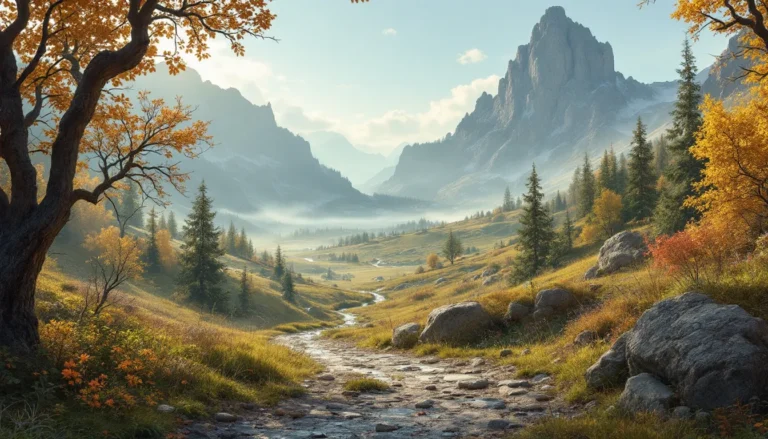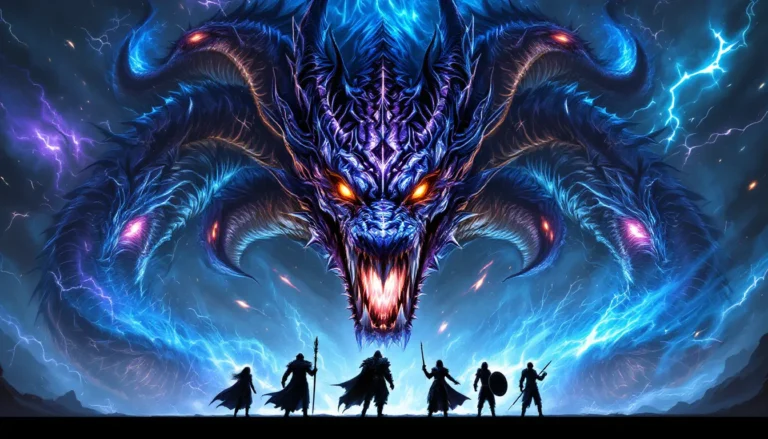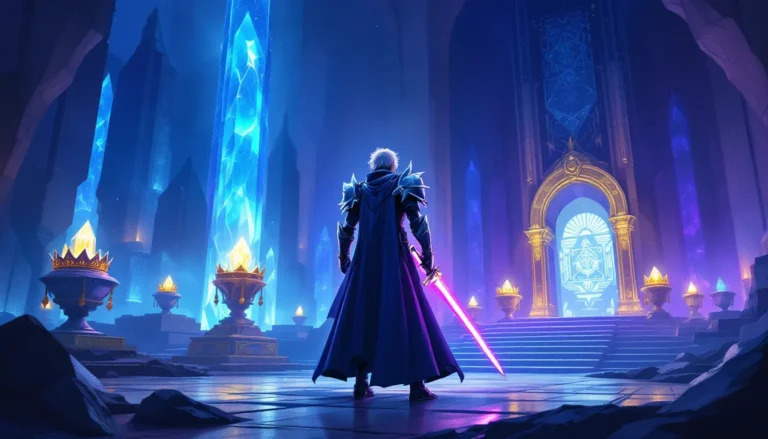
Final Fantasy concept art stands as one of gaming’s most influential visual traditions, shaping not just how characters and worlds look, but how players connect with them emotionally. From the pixelated heroes of the 8-bit era to the photorealistic landscapes of modern installations, the visual evolution of Final Fantasy tells a story as compelling as the games themselves. This art doesn’t exist in isolation, every sketch, every color palette choice, every character silhouette was engineered to serve the narrative, gameplay, and player immersion that defines the franchise. Whether you’re diving into the original NES title or exploring the sprawling worlds of Final Fantasy XV and its successors, the concept art laid the foundation for what you experience on screen. Understanding this visual language reveals how Square Enix transformed a humble 1987 debut into a cultural phenomenon that’s influenced an entire industry.
Table of Contents
ToggleKey Takeaways
- Final Fantasy concept art serves as the visual blueprint for the franchise, establishing character identity, world-building, and emotional tone that guide all downstream game development and player immersion.
- Yoshitaka Amano’s iconic ink and gouache paintings established the franchise’s visual identity across decades, proving that game character design could be fine art that communicates personality, backstory, and narrative arc through visual language.
- The evolution of Final Fantasy concept art from 8-bit pixel art to photorealistic 3D reflects broader gaming trends, yet maintains the franchise’s distinctive silhouettes, color palettes, and stylization that make it instantly recognizable.
- Concept art directly influences gameplay experience and player immersion by establishing visual identity, encoding narrative information, and creating cohesive worlds where design choices—from Cloud’s oversized sword to Sephiroth’s geometric severity—communicate character and story without dialogue.
- Official artbooks, museum exhibitions, and digital archives make Final Fantasy concept art accessible to players worldwide, legitimizing game design as serious artistic achievement and revealing the craft behind iconic character designs and environmental aesthetics.
What Is Final Fantasy Concept Art?
Final Fantasy concept art is the visual blueprint for the franchise, the sketches, paintings, character designs, and environmental illustrations created before a single line of game code runs. It’s where designers answer fundamental questions: What does Cloud Strife actually look like? How do we make a medieval fantasy castle feel unique? What emotional weight should a villain’s silhouette convey?
Concept art serves multiple purposes in game development. It’s a communication tool between artists, designers, and developers. It’s a testing ground for ideas before committing resources to 3D modeling and animation. It’s historical documentation, preserving the creative intent behind games played by millions. And critically for fans, it’s an art form in its own right, one that’s increasingly recognized in museums and galleries worldwide.
What separates Final Fantasy concept art from typical game design is its deliberate narrative weight. A single character sketch might communicate personality, backstory, and thematic relevance through color, pose, and detail. When Yoshitaka Amano sketches a character, he’s not just designing how they look, he’s encoding their entire arc into visual language.
The Role of Concept Art in Game Development
Pre-Production and Visual Direction
Concept art drives the entire pre-production phase. Before assets are built, before budgets are finalized, concept artists establish the visual direction that governs everything downstream. For Final Fantasy projects, this means establishing the world’s color palette, lighting philosophy, architectural styles, and character silhouettes.
In pre-production, concept art answers practical questions: Can we make this vision technically feasible? Does it fit our timeline? Does it align with our creative vision? These early explorations prevent costly missteps later. When Square Enix moved from 2D to 3D, concept art was essential in translating beloved 2D designs into three dimensions without losing their soul.
Character Development and Design Iteration
Character concept art is where iteration happens. A single character might go through dozens of iterations, exploring different silhouettes, color schemes, costume elements, and proportions. Early sketches are loose and exploratory. Later versions refine specific details: the way a character’s hair catches light, the symbolism embedded in their outfit, how their design communicates their role in the story.
This iterative process is visible in published artbooks. Compare early Cloud designs to his final form, and you’ll see how feedback, technical limitations, and creative refinement shaped what became one of gaming’s most iconic characters. The variations reveal design thinking, why certain choices were kept, why others were abandoned.
World-Building and Environmental Aesthetics
World-building through concept art establishes consistency and believability. Concept artists design architecture that feels lived-in, landscapes that make geographical sense, and environments that support gameplay. A Final Fantasy city isn’t just beautiful, it’s designed so players naturally know where to go, what’s important, and what story beats await.
Environmental concept art also establishes mood. The color palette of a location communicates emotional tone. A city shrouded in storm clouds feels different from one bathed in golden light, even before narrative context arrives. This visual language guides player emotion throughout their journey.
The Evolution of Art Styles Across Final Fantasy Generations
Early Pixel Art Era (FF I-VI)
The original Final Fantasy launched on NES in 1987 with severe technical constraints: 256×240 resolution, limited color palettes, and 8-bit processing power. Within these restrictions, the art direction was remarkably effective. Characters were recognizable even though being barely 16 pixels tall. The world felt cohesive even though graphical limitations.
Final Fantasy 1 NES established visual conventions that persisted for years: the generic-yet-iconic Warrior, Thief, Black Mage, and White Mage archetypes. These simple sprites communicated class identity instantly. As the series progressed through FF II, III, and IV, character designs became more detailed within pixel limitations, and visual storytelling improved dramatically.
FF VI (1994) represented the pinnacle of 16-bit Final Fantasy art. The SNES’s enhanced capabilities allowed richer backgrounds, more detailed character sprites, and more expressive animations. The world of FF VI felt vast and visually diverse, from the Esper realm to the Opera House. Pixel art had reached maturity.
These early games set the visual baseline: clear character silhouettes, readable designs even at small sizes, and consistent world-building that compensated for graphical limitations through artistic direction.
3D Revolution and Stylization (FF VII-X)
FF VII (1997) marked the seismic shift to 3D. The leap wasn’t technically perfect, early 3D character models look dated now, but artistically, it was transformative. Yoshitaka Amano’s concept art guided how 2D character designs translated to 3D space. Cloud’s impossible hair and oversized sword, which seemed exaggerated in 2D, somehow translated convincingly into 3D through careful proportioning and silhouette work.
The shift to 3D fundamentally changed concept art’s role. 2D artists had to collaborate with 3D modelers. Concept art became more technical, orthogonal views, turnarounds, and engineering specifications became necessary. But the best Final Fantasy concept artists maintained strong visual aesthetics even while providing technical documentation.
FF VII through X showed increasing sophistication in stylization. Rather than chasing photorealism, these games leaned into stylized character designs with exaggerated proportions and expressive features. This aesthetic choice aged far better than pure realism would have. FF X (2001) pushed this further with more dynamic lighting and fluid character animations, supported by increasingly detailed concept art showing musculature, fabric weight, and material properties.
Modern Photorealism and Hybrid Aesthetics (FF XV and Beyond)
FF XV (2016) and the Remake of FF VII (2020) embraced photorealism while maintaining stylization. This hybrid approach required new concept art disciplines. Artists had to design characters and environments that looked photoreal but retained the distinct Final Fantasy aesthetic, the iconic silhouettes, the dramatic proportions, the color language that made the series recognizable.
Modern concept art for Final Fantasy projects is technically demanding. Artists work in 3D sculpture software, creating digital maquettes that guides 3D asset creation. They render complex lighting scenarios, material studies, and environmental detail that would be impossible to convey in traditional 2D painting alone.
Yet even though technical sophistication, the best modern Final Fantasy concept art maintains emotional impact. Final Fantasy 7 Rebirth concept work shows how the series maintains its identity even in an era of photorealism, the designs still read as unmistakably Final Fantasy through silhouette, color, and character expression.
Iconic Character Designs and Their Concept Origins
Cloud Strife and the FF VII Renaissance
Cloud Strife is arguably Final Fantasy’s most recognizable character globally, and his design journey illuminates how concept art drives character identity. Yoshitaka Amano’s original sketches for FF VII show a character with gravity-defying blonde hair, an oversized sword, and angular features. These design choices weren’t aesthetic whims, they served narrative purposes.
Cloud’s proportions immediately communicate something off-kilter about his character, even before players understand his fractured psyche. His massive sword emphasizes his trying too hard, the overcompensation visible in his silhouette. His hair’s impossible physics suggest he doesn’t belong to normal reality.
When FF VII Remake arrived in 2020, Cloud’s design faced a critical test: could his 1997 aesthetics translate to 2020 photorealism? The answer was a sophisticated redesign that maintained Amano’s original intent while modernizing proportions. His hair still defies physics, but in ways that feel less cartoony and more genuinely unsettling. His sword is still enormous, but its engineering is more convincing. The concept art for the Remake shows how designers preserved design DNA while adapting to technological reality.
Aerith, Tifa, and Female Character Design Philosophy
Final Fantasy’s approach to female character design through concept art reveals evolving design philosophy. Aerith, the flower merchant turned fighter, was designed by Amano with a flowing dress, pink ribbon, and soft features that communicate her gentleness even though her combat abilities. Her design encodes her role as emotional heart of the narrative.
Tifa, the martial artist, was designed with practical fighting-focused clothing and confident posture. Her concept art emphasizes movement and balance, visible in her stance and the way her design conveys physical capability. Different characters, different visual languages.
What’s notable in modern Final Fantasy concept art is the move away from sexualized designs toward designs that communicate character and capability. Compare FF VII original art to FF VII Remake: both Aerith and Tifa are still recognizable, still visually distinct, but their designs emphasize functionality and personality over sexualization. Their concept art became less about appealing to a male gaze and more about conveying who they are.
Sephiroth and Antagonist Aesthetics
Sephiroth represents a masterclass in antagonist design through concept art. Yoshitaka Amano’s sketches show a character designed to feel fundamentally wrong, impossibly tall, with an angular face, silver hair that falls like a cloak, and severe angular features. Every element communicates threat and otherness.
His concept art emphasizes verticality, he’s designed to loom over other characters, literally looking down on them. His outfit is geometric and sharp, with layers that feel like armor without looking practical. His design says “this character doesn’t play by normal rules.” Players sense Sephiroth’s threat before understanding his narrative role, thanks entirely to visual communication established in concept art.
Behind the Scenes: The Artists and Studios Behind Final Fantasy Visuals
Yoshitaka Amano and His Legacy
Yoshitaka Amano stands as the primary architect of Final Fantasy’s visual identity. From FF I through FF VI, and as concept design lead for FF VII, Amano established the visual language that defined the franchise. His illustration style, ink and gouache paintings with refined detail and expressive line work, became synonymous with “Final Fantasy” aesthetically.
Amano’s influence extends beyond individual game designs. His approach to character design influenced an entire generation of game artists. His work proved that game character design could be fine art, elegant, emotionally communicative, and technically sophisticated. Museums and galleries now recognize his contributions to gaming alongside traditional fine art.
What made Amano irreplaceable was his ability to communicate volumes through minimal information. A single Amano sketch could establish character, personality, emotional arc, and role in the narrative. His designs worked at every scale, from concept art to pixel art to 3D models.
Square Enix’s Modern Art Direction Teams
Modern Final Fantasy projects involve vast art departments. FF XV, for instance, featured art directors overseeing dozens of specialists: character designers, environment artists, technical artists, lighting specialists, and VFX artists. The concept art phase involved creating tens of thousands of individual illustrations and sketches.
Square Enix’s art departments have evolved to handle massive scope. Where Amano sketched characters individually, modern teams create extensive design documentation: turnarounds from every angle, material specifications, animation guidelines, and environmental context. Siliconera and similar gaming outlets have covered how modern Final Fantasy projects involve collaborations across multiple studios and countries.
Even though scale increases, the best modern Final Fantasy concept art maintains artistic coherence. Art direction remains crucial, ensuring that hundreds of artists working simultaneously maintain visual consistency. This requires stronger concept art documentation and clearer artistic vision than ever before.
Collaborations with International Artists
Square Enix increasingly collaborates with international artists on Final Fantasy projects. FF XV featured collaborations with artists from multiple countries, bringing diverse visual perspectives to the franchise. These collaborations expanded the artistic vocabulary available while maintaining Final Fantasy’s identity.
International collaboration also appears in outsourcing arrangements. While Square Enix maintains creative direction, substantial art production happens in partner studios globally. Managing these collaborations requires concept art that’s clear, communicative, and capable of transcending language barriers. The detailed technical art direction necessary for modern games actually makes this possible, specifications are visual and geometric rather than language-dependent.
Where to Find and Appreciate Final Fantasy Concept Art
Official Artbooks and Publications
Square Enix publishes extensive concept art collections. The “Ultimania” artbook series provides comprehensive design documentation for most major Final Fantasy titles. These books feature concept sketches, artist commentary, design evolution, and final asset renders. They’re invaluable for understanding how designs developed and why specific choices were made.
FF VII Remake’s artbook, released after the game, showcases the challenge of modernizing Amano’s 1997 designs. Side-by-side comparisons reveal design philosophy: what elements were sacred to the character’s identity and what could evolve. These books make concept art accessible to players without requiring museum visits.
Other publishers also release Final Fantasy art collections, books focusing on specific characters, locations, or artistic periods. These vary in official status but many feature legitimate archival material and artist commentary.
Museums and Exhibition Exhibitions
Final Fantasy concept art has appeared in major museum exhibitions globally. The “Final Fantasy & The Art of Yoshitaka Amano” exhibition traveled internationally, displaying original paintings, sketches, and sculptures. These exhibitions positioned Final Fantasy concept art within fine art contexts, legitimizing game design as serious artistic try.
Other exhibitions have focused on game design more broadly, with Final Fantasy featuring prominently. The Museum of Modern Art in New York has included Final Fantasy pieces in gaming design retrospectives. These institutional recognitions reflect how concept art has transitioned from commercial work to culturally significant art.
Digital Archives and Online Resources
Square Enix maintains some official digital archives of concept art, released gradually through social media and official channels. Also, fan communities have compiled extensive digital collections of concept art released across interviews, artbooks, and official publications.
Gaming news sites like Gematsu frequently feature high-quality scans of concept art and design announcements. RPG Site covers JRPG design trends and frequently analyzes Final Fantasy concept art in detail. These resources help enthusiasts stay current with new releases and design trends.
Importantly, accessing concept art through official channels supports the artists and developers who created it. Purchasing official artbooks and supporting legitimate digital releases ensures continued investment in high-quality concept art documentation.
How Concept Art Influences Gameplay and Player Experience
Visual Identity and Player Immersion
Concept art’s most direct influence is establishing visual identity, the immediate aesthetic recognition that makes a game feel like Final Fantasy rather than generic fantasy. This identity makes players feel welcomed into a familiar world, even in completely new entries in the franchise. When you boot FF XVI and see its specific color palette, character proportions, and environmental design language, you recognize it as Final Fantasy within seconds.
This visual identity also drives immersion. Consistent, cohesive visuals make worlds feel real and lived-in. Every character, building, and landscape reinforces the game’s visual rules. When concept art establishes those rules clearly, players unconsciously trust the world’s internal logic.
Visual identity also supports marketing and cultural penetration. Characters designed with strong, memorable silhouettes, Cloud’s impossible hair, Aerith’s pink ribbon, Sephiroth’s geometric severity, become instantly recognizable. These designs function as visual shorthand, communicating character identity to players who haven’t encountered them before.
The Connection Between Art Direction and Narrative
Concept art encodes narrative information visually. Character designs communicate their roles, personalities, and arcs before dialogue begins. Environmental concept art establishes thematic tone, a city’s color palette and architecture communicate whether it’s a safe haven or threatening environment.
The connection between art direction and narrative becomes obvious in character design choices. Zidane Final Fantasy was designed as a cheerful, youthful protagonist, visible immediately in his costume’s bright colors and playful proportions. This visual design sets up his character arc, making his later emotional depths more impactful through contrast with his initial visual presentation.
Environmental design similarly supports narrative. Consider how Final Fantasy 4 Characters were designed to fit their specific environments, how character silhouettes and color palettes harmonize with the worlds they inhabit. This visual coherence makes narrative moments land harder because the visual language supports thematic meaning.
Modern Final Fantasy games increasingly use concept art to establish narrative tone before players encounter story content. A world’s concept art reveals its emotional landscape, whether it feels hopeful or oppressive, stable or chaotic. Players absorb these emotional impressions through visual language, making subsequent narrative beats more powerful.
Conclusion
Final Fantasy concept art represents far more than pre-production documentation. It’s the creative DNA of gaming’s most consistent and influential franchise, the visual language through which millions of players experience epic stories and unforgettable characters. From Yoshitaka Amano’s ink paintings that defined the franchise’s identity to modern digital teams creating photorealistic environments, concept art has remained central to what makes Final Fantasy instantly recognizable.
The evolution of Final Fantasy’s visual style tracks broader trends in game art: pixel perfection giving way to 3D experimentation, stylization proving more timeless than photorealism, and increasing technical sophistication enabling more ambitious artistic visions. Yet through every technological leap, the fundamental purpose remained constant, concept art exists to serve the player’s experience, to communicate character and world through visual language that transcends words.
For gamers wanting to deepen their appreciation of the franchise, studying concept art offers windows into creative decision-making and artistic intent. Official artbooks provide legitimate access to this work while supporting the artists who created it. Whether examining how Cloud’s design evolved across decades or understanding how environment artists established final fantasy concept art’s distinct architectural language, concept art reveals the craft behind the magic.
As the franchise continues evolving, concept art will remain foundational. Future Final Fantasy entries will push artistic boundaries further, incorporating new technologies, exploring different aesthetic directions, and finding fresh ways to communicate narrative through visual design. The legacy established by decades of exceptional concept art provides the foundation for whatever comes next. Understanding that legacy enriches appreciation for the games themselves, transforming them from entertainment into artistic achievements worthy of serious critical engagement.